
Oct, 06 2025
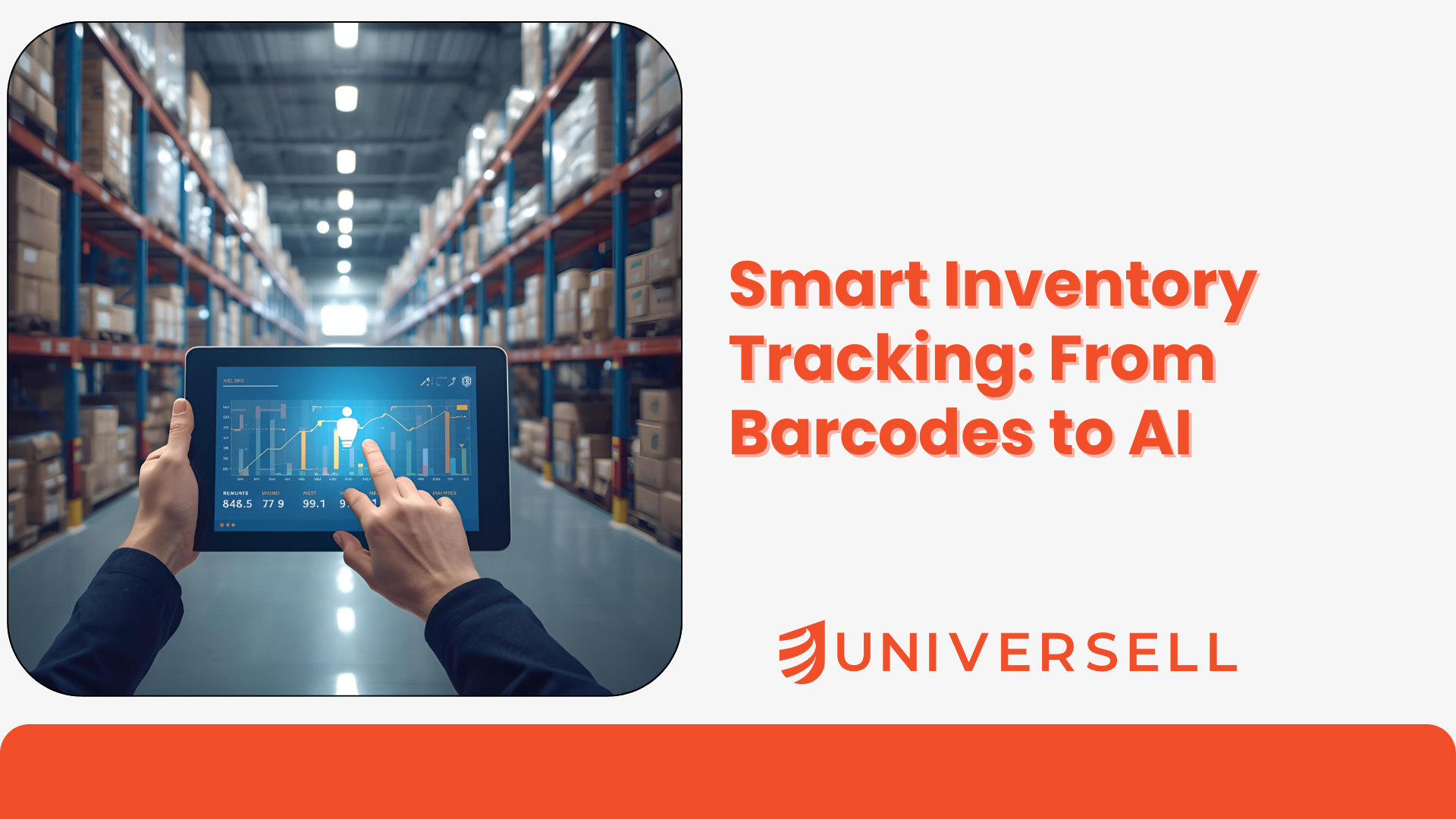
Smart Inventory Tracking: From Barcodes to AI
Inventory tracking has always been the backbone of retail and supply chain operations. From the first barcodes in the 1970s to today’s AI-powered computer vision, the journey has transformed how businesses manage stock. Each step has improved accuracy, efficiency, and visibility, helping retailers meet rising customer expectations and global competition.
📌 The Barcode Revolution
Barcodes were the first big leap. Before them, inventory counts were slow, manual, and error-prone. With barcode scanners, retailers could identify products instantly, update stock in real time, and reduce mistakes. This standardisation helped fuel global retail growth and remains essential for many small businesses today.
📌 RFID and Smarter Tracking
In the 2000s, Radio Frequency Identification (RFID) emerged as the next step. Unlike barcodes, RFID tags didn’t need direct scanning. Whole pallets could be read at once, enabling faster stock checks and real-time visibility. Retailers like Walmart and Zara adopted RFID to cut shrinkage, improve supply chain efficiency, and ensure products stayed on shelves.
📌 IoT and Connected Systems
The rise of the Internet of Things (IoT) brought connected sensors into warehouses and stores. Smart shelves, GPS trackers, and temperature monitors enabled businesses to:
Track stock continuously
Monitor product conditions
Anticipate replenishment needs
IoT turned inventory management from reactive to proactive, adding intelligence to supply chains.
📌 The Computer Vision Era
Today, computer vision is redefining inventory tracking. Using cameras and AI, these systems can:
Count and identify products on shelves automatically
Detect misplaced or missing items
Provide real-time visibility across multiple locations
Reduce dependence on manual cycle counts
Starbucks, for example, now uses computer vision and AR to conduct inventory counts up to eight times more often, cutting errors and freeing staff for customer service.
📌 Why This Evolution Matters
The move from barcodes to computer vision is about more than technology-it’s about staying competitive. Smart tracking delivers:
Accuracy: Reliable data with fewer errors
Speed: Faster replenishment cycles
Cost Savings: Reduced labour and shrinkage
Better Experience: Products available when customers want them
For retailers, these advances are not optional-they’re critical for growth in a fast-changing market.
📌 What’s Next
The future points to even smarter systems. AI will forecast demand, blockchain will add transparency, and robotics will automate stock movement. For smaller businesses, cloud-based inventory tools are making advanced solutions affordable and accessible.
In 2025 and beyond, computer vision is not just an upgrade-it’s the foundation of modern inventory tracking. Early adopters will gain a lasting edge.
✅ Key Takeaway: From barcodes to computer vision, inventory tracking has evolved into a powerful growth driver. Businesses that adapt will thrive against both challenges and competition.
👉 With Universell Platform, retailers get access to smart inventory tools, real-time insights, and automation in one suite. It’s the partner designed to future-proof your business.
🌐 Learn more at: www.universell.com
#InventoryManagement #SmartInventory #RetailInnovation #ComputerVision #SupplyChain2025 #RetailGrowth #POSsolutions #UniversellPlatform #RetailTechnology #FutureOfRetail