It is easy to feel overwhelmed by the AI conversation right now. Headlines chase artificial general intelligence, benchmarks move every quarter, and the jargon keeps shifting under our feet. But here is the thing most business owners are missing: the breakthroughs that actually matter for your company are not happening at the model layer. They are happening at the system level, inside the everyday workflows where you run your business.
That is good news for small and mid-sized companies. You do not need a data science team to benefit from what is coming. You need a platform that puts these capabilities to work in the tools you already use every day, like your CRM, your inventory, your marketing, and your payments. That is exactly the direction the industry is heading, and it is the direction Universell is built around.
Here are the five AI trends that will reshape business operations in 2026, and what each one means for you.
Ambient intelligence: AI that works behind the scenes
For most of the past two years, AI has been reactive. You ask, it answers. You type a prompt, you get a result. In 2026, that relationship flips. The most useful AI will be ambient, meaning it is always on in the background, aware of what is happening in your workflow, and ready to act before you even ask.
Picture a sales rep on a call with a customer. Instead of pausing to look something up, the system listens, surfaces the relevant history, and suggests the next best step in real time. No prompting required. Now apply that same idea across your business. Inventory that reorders itself when stock runs low. Marketing that adjusts a campaign when engagement dips. Support that flags a frustrated customer before they churn.
This shift from ask and receive to anticipate and deliver is the single biggest change in how knowledge workers will operate this year. For a growing business, it means your team stops hunting for information and starts making decisions.
The semantic layer: AI agents that talk to each other
Today, most AI works in isolation, one tool handling one task. The next evolution adds orchestrator agents that coordinate fleets of specialists, and a shared language that lets agents from different companies negotiate with each other.
Think about what that unlocks. A single agent could coordinate your inventory, your logistics, your billing, and your customer follow-up at the same time, each specialist focused on its own job while an orchestrator keeps everything aligned. And when agents from different organizations can understand each other, entire processes become automated end to end. A supplier’s system talks to your system. Your system talks to your bank. The whole transaction happens without a single manual handoff.
The practical takeaway for 2026 is simple: look for platforms where your tools are not just connected but coordinated. That is the difference between having apps and having an operating system for your business.
Simulation environments: AI that is tested before it touches your customers
Here is an uncomfortable truth about AI: its performance is jagged. The same model that dazzles you with a clever response can stumble on a routine task. That inconsistency is exactly what businesses cannot tolerate when the stakes are real.
So in 2026, expect simulation to become a standard part of enterprise AI. Just as pilots log flight hours and surgeons complete supervised procedures, AI agents will be trained and tested in realistic environments before they ever handle a live customer interaction. Buyers will start asking how many simulated hours an agent has completed and what edge cases it has encountered.
This matters to you because it is a quality signal. When a vendor tells you their AI is reliable, the responsible ones can show you the proof. Simulation is how AI goes from occasionally brilliant to consistently dependable.
Enterprise general intelligence: consistently excellent, not occasionally brilliant
You have probably heard a lot about AGI, artificial general intelligence that can do anything a human can. It is a fascinating idea and almost entirely irrelevant to running a business. What actually matters is something closer to enterprise general intelligence: AI that handles the specific, complex tasks of your operations with both capability and consistency.
The difference is subtle but crucial. Capability means the AI can do a hard task. Consistency means it does it correctly every single time, even when the data is messy, the information is incomplete, or the situation is unusual. For business, consistency wins. Ninety percent accuracy sounds impressive until you realize it means one customer in ten gets the wrong answer.
As new benchmarks emerge that measure both capability and consistency, expect reliability to become a line item in every serious evaluation of business software. The vendors who invest in dependable AI will be the ones worth your attention.
Agentic AI: from tools to teammates
The umbrella trend tying all of this together is agentic AI, systems that do not just answer questions but take action. Instead of telling you what to do, they do it, then report back. Instead of suggesting a next step, they complete the step and keep moving.
This is where the vision becomes practical. An agent that manages your inventory, updates your records, follows up with a customer, and flags the exceptions that genuinely need a human is not a novelty. It is a force multiplier for a team that does not have time to waste.
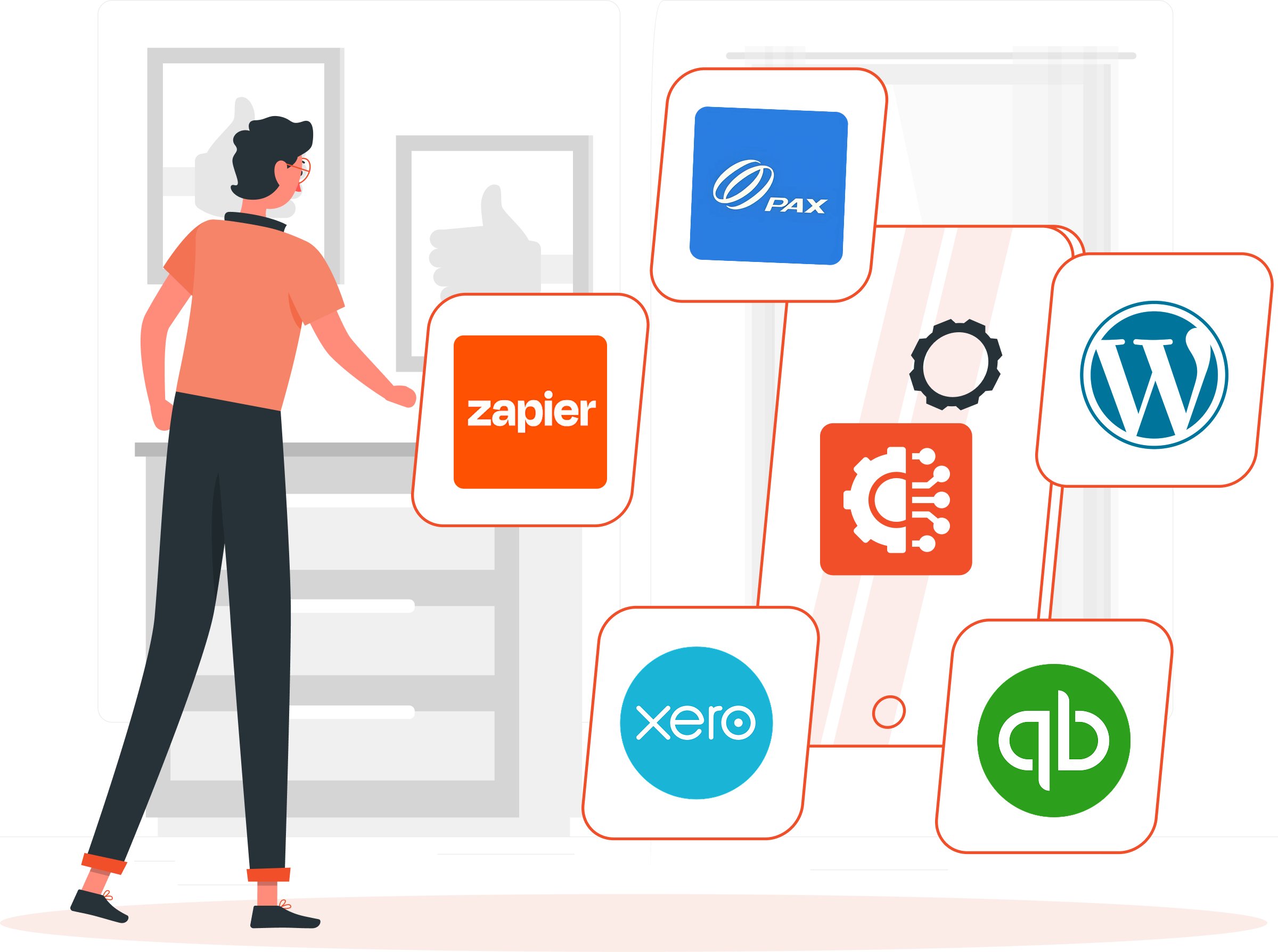
The key is choosing the right partner. The most powerful AI in the world is useless if it is locked in a separate tool that your team never opens. What makes agentic AI valuable is integration, the ability to act across your entire operation in one place.
What this means for your business
Here is the honest summary. You do not need to understand every technical detail of these trends to benefit from them. You need a platform that brings them together in tools your team already uses, that is tested and reliable, and that actually takes work off your plate instead of adding more.
That is the philosophy behind Universell. It is one unified system that brings together your CRM, inventory, e-commerce, marketing, payments, and back-office operations, all powered by AI, so your business runs as one connected whole. When AI works behind the scenes, coordinates across your tools, and is dependable enough to trust, it stops being a talking point and starts being a competitive advantage.
The businesses that win in 2026 will not be the ones with the flashiest AI. They will be the ones that put dependable, integrated AI to work in the daily operations that drive growth. That is a goal any business can reach, try it for yours today, it’s free!