Payment processing software for small retailers ranges from pay-as-you-go services to broader retail platforms that combine payments with POS, inventory, customer management, ecommerce, reporting, and other business tools.
The lowest transaction rate does not automatically make a processor the best choice. Retailers also need to consider where payments happen, what hardware is required, how transactions connect with inventory and customer records, and how much additional software the business still needs.
Some platforms specialise primarily in payment processing. Others connect payments directly with POS and ecommerce, while broader platforms connect payments with additional business-management functions.
In this guide, each option is compared using the same criteria:
- Overview
- Key features
- Pricing
- Example use case
- Best for
- Strengths
- Limitations
Payment rates and plans can change, so businesses should confirm current pricing directly with each provider.
What Small Retailers Should Look for in Payment Processing Software
In-Person Payments
Physical retailers should be able to accept common payment methods such as credit cards, debit cards, contactless cards, Apple Pay, Google Pay, digital wallets, and Tap to Pay.
Payment should be one of the simplest parts of the customer experience.
Transparent Processing Costs
Payment costs can include transaction percentages, fixed per-transaction fees, monthly subscriptions, hardware costs, chargeback fees, online payment rates, and card-not-present fees.
Retailers should calculate total processing costs based on their actual transaction mix rather than comparing one headline percentage.
Online and In-Store Payments
Many retailers now accept payments through several channels, including:
In store
Online
Payment links
Invoices
Events
Pop-up stores
Social commerce
A connected payment environment can make these transactions easier to reconcile.
POS Connection
The payment processor handles the movement of money, while the POS records what was sold.
When the systems connect, a workflow can look like:
Product → Checkout → Payment → Inventory Update → Customer Record → Reporting
Reducing manual steps can help improve accuracy.
Inventory Connection
If the final unit of a product is sold but inventory still shows one unit available, another customer may purchase stock the retailer no longer has.
Connecting sales and inventory can reduce this problem.
Customer Information
Payment activity can also provide useful customer context.
Retailers may want to understand purchase history, average order value, repeat visits, loyalty participation, and previous transactions.
Reporting and Reconciliation
Useful payment reporting can include gross sales, refunds, fees, net sales, deposits, transaction history, taxes, chargebacks, and payment methods.
Good reporting reduces the time required to reconcile payment activity.
1. Square: Best for Easy In-Person Payment Processing
Overview
Square combines payment processing with POS functionality and is widely used by smaller physical businesses.
Its relatively simple setup makes it useful for retailers that want to begin accepting card and contactless payments without building complicated payment infrastructure.
Key Features
- Chip and contactless payments
- Tap to Pay
- Digital wallets
- Online payments
- Invoices
- Cards on file
- Manually entered payments
- POS functionality
- Customer information
- Sales reporting
Pricing
Square uses transaction-based pricing, with rates varying by payment method and plan.
Additional Square products and paid software plans may have separate costs.
Example Use Case
A new boutique wants to accept card payments at the checkout counter, occasionally send customer invoices, and track basic sales without implementing several separate systems.
Square provides a relatively simple starting point for those requirements.
Best For
Small physical retailers that want straightforward payments and POS functionality.
Strengths
Square is relatively easy to implement and offers a broad range of payment methods, POS features, and hardware options.
Limitations
Retailers with more sophisticated inventory, CRM, marketing, or operational requirements may eventually need additional Square products or third-party systems.
2. Shopify Payments: Best for Shopify Retailers
Overview
Shopify Payments is designed to work directly within the Shopify commerce ecosystem.
Retailers using Shopify can manage payments alongside products, ecommerce orders, customer information, inventory, and physical-store transactions.
Key Features
- Online card payments
- In-person payments
- Shopify checkout
- Digital wallets
- Refund management
- Payment reporting
- Customer transaction history
- Ecommerce integration
- POS integration
- Omnichannel commerce
Pricing
Processing rates depend on the Shopify plan and payment type.
Shopify also charges for its commerce plans, and more advanced physical-retail functionality may require additional POS subscriptions.
Example Use Case
A retailer sells the same products through a Shopify website and a physical store.
Using Shopify Payments keeps payment activity closer to the same system managing products, orders, customers, and inventory.
Best For
Retailers already using Shopify for ecommerce or omnichannel selling.
Strengths
Shopify Payments offers strong integration with the wider Shopify commerce environment.
Limitations
Businesses not already using Shopify may not benefit enough from the ecosystem to justify the associated commerce subscriptions.
3. Stripe: Best for Custom Online Payment Experiences
Overview
Stripe provides extensive online payment infrastructure and developer tools.
It is particularly relevant to retailers that want more control over checkout experiences, subscriptions, embedded payments, or international transactions.
Key Features
- Online card payments
- Payment links
- Subscriptions
- Recurring billing
- Embedded payments
- International payment methods
- Custom checkout
- Marketplace payments
- Mobile payments
- Developer APIs
Pricing
Stripe generally uses transaction-based pricing.
Additional costs can apply depending on international cards, currency conversion, and specialised services.
Example Use Case
An ecommerce retailer has a custom-built website and wants to create its own checkout flow rather than relying entirely on a standard hosted commerce platform.
Stripe provides the infrastructure for that type of payment setup.
Best For
Online retailers requiring flexible or customised payment infrastructure.
Strengths
Stripe provides extensive payment flexibility, strong developer tools, and broad international support.
Limitations
It is primarily payment infrastructure. Retailers may still need separate systems for inventory, CRM, marketing, POS, and other business operations.
4. Universell Platform: Best for Connecting Payments With Broader Operations
Overview
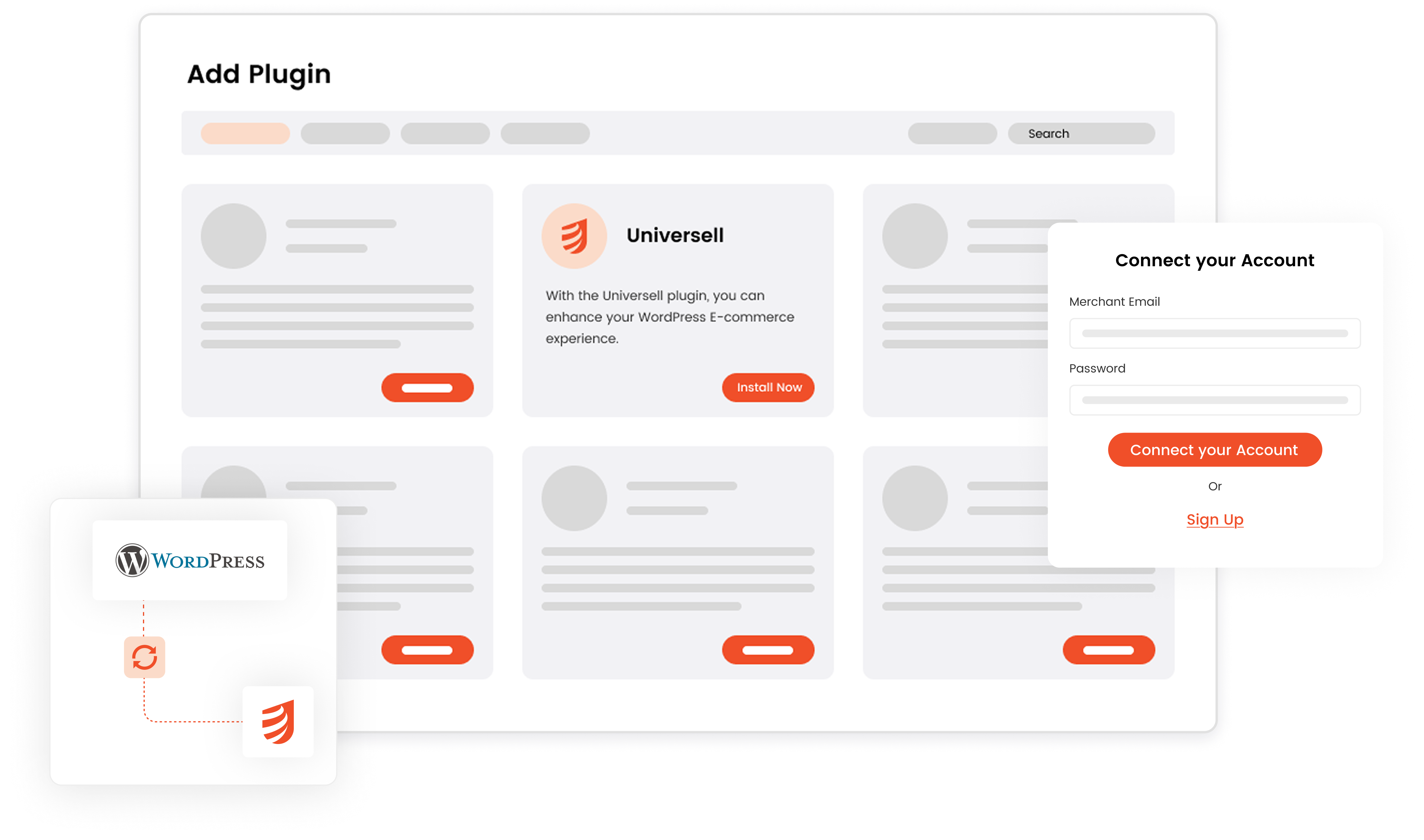
Universell treats payment processing as one part of a broader small-business management environment.
Its approach is aimed at businesses that want payments to operate alongside other functions rather than as a completely separate system.
Key Features
- Payment processing
- Card payments
- ACH payments
- Invoicing
- Recurring billing
- Cash and check recording
- CRM
- Inventory management
- Sales management
- Marketing
- Scheduling
- Reporting
- Automation
Pricing
Businesses should check directly with Universell for current payment-processing rates, software pricing, and plan availability.
Example Use Case
A retailer processes a customer payment and also wants the transaction to remain closer to inventory records, customer information, sales reporting, marketing activity, and other operational workflows.
An integrated platform can reduce the number of separate systems involved.
Best For
Small retailers that want payments connected with inventory, CRM, sales, marketing, scheduling, and broader business operations.
Strengths
Universell’s main advantage is consolidation across multiple business functions.
Limitations
Businesses that only want a simple payment terminal may find a specialised processor easier. Retailers requiring highly customised payment-development infrastructure may prefer platforms focused specifically on APIs.
5. PayPal: Best for Familiar Online Checkout
Overview
PayPal is one of the most recognisable digital payment platforms and remains relevant for retailers that want to give customers an additional familiar online checkout option.
Key Features
- PayPal checkout
- Credit and debit cards
- Venmo
- Pay Later
- Online payments
- In-person payments
- QR payments
- Virtual terminal
- Invoicing
Pricing
PayPal applies different transaction rates depending on payment method and transaction type.
Businesses should review the rates that apply to their expected payment mix.
Example Use Case
An online retailer already accepts standard cards but wants customers to have the option to complete checkout using their PayPal account or another PayPal-supported payment method.
Best For
Online businesses that want to offer familiar alternative payment options.
Strengths
PayPal benefits from strong customer recognition and broad online-payment adoption.
Limitations
It is primarily a payment ecosystem, so deeper inventory, CRM, employee, marketing, or operational functions may still require other software.
6. Clover: Best for POS Hardware and Payments
Overview
Clover combines payment processing with POS hardware and software designed primarily for in-person commerce.
Its product lineup includes countertop terminals, mobile devices, card readers, and other checkout equipment.
Key Features
- Card processing
- Countertop POS
- Mobile payment devices
- Receipt printing
- Customer-facing displays
- Product management
- Inventory tools
- Employee features
- Reporting
- POS software
Pricing
Clover pricing varies based on hardware, plan, processor, merchant agreement, and provider.
Businesses should review the complete contract rather than hardware costs alone.
Example Use Case
A retailer replacing a traditional cash register wants a dedicated checkout station that accepts payments, manages products, prints receipts, and provides basic sales reporting.
Best For
Brick-and-mortar businesses that prioritise dedicated POS hardware.
Strengths
Clover provides a strong physical checkout experience by combining hardware, software, and payment processing.
Limitations
Pricing can vary considerably depending on how the Clover system and merchant-services agreement are purchased.
7. Helcim: Best for Interchange-Plus Pricing
Overview
Helcim uses an interchange-plus pricing model rather than relying only on standard flat-rate processing.
The underlying card cost is passed through with an additional processor markup.
Key Features
- In-person payments
- Online checkout
- Virtual terminal
- Invoicing
- Recurring payments
- Payment links
- Card storage
- Customer management
- POS functionality
Pricing
Helcim uses interchange-plus pricing, so processing costs vary based on transaction type and card used.
Example Use Case
A growing retailer processes a significant monthly card volume and wants to evaluate whether interchange-plus pricing may be more economical than a fixed flat-rate model.
Best For
Retailers that prioritise payment-processing economics and transparency.
Strengths
Interchange-plus pricing may offer advantages for certain transaction mixes and higher-volume businesses.
Limitations
The pricing structure is less immediately predictable than a simple published flat rate.
8. Lightspeed Payments: Best for Established Retail Operations
Overview
Lightspeed Payments operates within the wider Lightspeed Retail ecosystem.
For retailers already using Lightspeed, payments can remain closely connected with products, customers, inventory, stores, suppliers, and reporting.
Key Features
- Integrated payment processing
- POS
- Inventory management
- Customer management
- Multi-location support
- Supplier management
- Product management
- Refund management
- Sales reporting
- Retail analytics
Pricing
Costs depend on the Lightspeed retail plan, payment arrangement, locations, and other configuration requirements.
Example Use Case
A specialty retailer operates two locations with thousands of SKUs, multiple suppliers, stock transfers, and detailed sales-reporting requirements.
Lightspeed can manage payments as part of that broader retail environment.
Best For
Established specialty retailers and multi-location businesses.
Strengths
Lightspeed provides strong integration between payments and more sophisticated retail-management functionality.
Limitations
Very small retailers may not require the depth or cost associated with a more extensive retail system.
9. Toast: Best for Food-Focused Retail Businesses
Overview
Toast primarily serves restaurants and foodservice businesses, but it can also be relevant to retailers where food preparation and retail sales overlap.
Key Features
- Payment processing
- POS
- Online ordering
- Customer management
- Loyalty options
- Reporting
- Employee functionality
- Hardware
- Order management
- Foodservice workflows
Pricing
Toast offers different software, hardware, and payment configurations.
Businesses should obtain current pricing based on their specific setup.
Example Use Case
A bakery sells packaged retail products while also taking orders for drinks, prepared food, takeaway items, and online orders.
Toast’s foodservice-focused workflow can make more sense than a traditional general-retail POS.
Best For
Retail businesses where foodservice is a significant part of everyday operations.
Strengths
Toast’s specialised hospitality functionality is well aligned with food-focused businesses.
Limitations
Traditional apparel, furniture, jewellery, gift, or general specialty retailers may find other platforms more relevant.
Quick Comparison
| Platform | Best For | Payment Focus | Retail Operations | Online + In-Person |
| Square | Easy in-person payments | Strong | Strong | Yes |
| Shopify Payments | Shopify retailers | Strong | Excellent within Shopify | Yes |
| Stripe | Custom online payments | Very Strong | Limited without integrations | Yes |
| Universell | Payments + broader operations | Strong | Strong | Yes |
| PayPal | Familiar online checkout | Strong | Moderate | Yes |
| Clover | POS hardware + payments | Strong | Strong | Yes |
| Helcim | Interchange-plus pricing | Strong | Moderate | Yes |
| Lightspeed Payments | Established retailers | Strong | Excellent | Yes |
| Toast | Food-focused retail | Strong | Specialised | Yes |
Flat-Rate vs. Interchange-Plus Processing
Flat-rate pricing provides a predictable percentage and fixed fee for eligible transactions.
Interchange-plus pricing passes through the underlying interchange cost and adds the processor’s markup.
Flat-rate pricing is generally easier to understand, while interchange-plus pricing can potentially become attractive for businesses with larger or particular transaction mixes.
Retailers should compare both models using their actual monthly sales volume and average transaction value.
Consider the Total Payment Cost
Processing rates are only one component of the total cost.
Retailers may also pay for:
- POS software
- Hardware
- Chargebacks
- Online payment fees
- CRM
- Inventory software
- Marketing
- Loyalty
- Reporting
- Integrations
A lower processing rate does not necessarily mean a lower total software cost.
Payment Processor vs. All-in-One Retail Platform
| Requirement | Standalone Processor | All-in-One Platform |
| Card payments | ✓ | ✓ |
| Online payments | Usually | Usually |
| In-person payments | Usually | ✓ |
| Payment reporting | ✓ | ✓ |
| Inventory | Usually separate | Connected |
| CRM | Separate/limited | Connected |
| Marketing | Separate | Connected |
| Scheduling | Separate | Connected |
| Customer management | Limited/optional | Broader |
| Business reporting | Payment-focused | Broader |
Neither approach is automatically better. A specialised processor may be preferable when payments are the main requirement. A broader platform may make more sense when payments are part of a larger fragmented software environment.
Which Payment Processing Software Should You Choose?
Consider Square if you want straightforward in-person payment processing and POS functionality.
Consider Shopify Payments if Shopify already powers your ecommerce or omnichannel retail operation.
Consider Stripe if custom online payment infrastructure is a priority.
Consider Universell if you want payments connected with CRM, inventory, sales, marketing, scheduling, and other operational tools.
Consider PayPal if customer familiarity and alternative online checkout options matter.
Consider Clover if dedicated physical POS hardware is important.
Consider Helcim if interchange-plus pricing is a major consideration.
Consider Lightspeed Payments if you manage a more established, inventory-heavy, or multi-location retail operation.
Consider Toast if foodservice is central to your business.
Frequently Asked Questions
What is the best payment processor for a small retail business?
The answer depends on how the business accepts payments and which other systems it already uses.
Square can work well for straightforward physical retail payments. Shopify Payments is relevant to Shopify retailers, while Stripe offers stronger custom online-payment capabilities.
Universell is another option when payment processing needs to connect with broader business-management functions.
What is the cheapest payment processor?
There is no single cheapest processor for every retailer.
Actual costs depend on transaction volume, average transaction size, card type, online versus in-person sales, hardware, monthly fees, and other charges.
Do I need both a POS and payment processor?
Usually, yes, although both functions can exist within the same platform.
The POS records what the customer purchased, while the payment processor handles the financial transaction.
Should retailers compare payment platforms only by transaction rate?
No.
Retailers should also compare hardware, monthly subscriptions, inventory connections, customer management, online payments, reporting, and additional software requirements.
Can retailers accept payments without a physical card reader?
Some platforms support Tap to Pay on compatible smartphones, allowing eligible contactless cards and digital wallets to be accepted without a separate reader.
Should online and in-store payments use the same platform?
Using one connected platform can simplify reporting, reconciliation, refunds, and customer transaction history.
However, specialised businesses may still benefit from different payment providers for different channels.
Your Next Step
Choose payment software based on your complete retail workflow rather than transaction rates alone.
If straightforward payment acceptance is the main requirement, a specialised processor may be enough. If payments need to connect with inventory, customers, sales, marketing, scheduling, and reporting, a broader platform may be more suitable.
Universell Platform is one option for retailers looking to manage these functions within a more connected business environment.
By Katya Z. | Marketing Manager
Business technology, AI, marketing & e-commerce