Retail marketing software has changed significantly.
For mid-market retailers, the goal is no longer simply to send more emails or run more promotions. The bigger challenge is understanding customers, creating relevant experiences, encouraging repeat purchases, and coordinating communication across multiple channels.
A growing retailer may already have thousands or hundreds of thousands of customers interacting through ecommerce, physical stores, mobile channels, loyalty programs, email, SMS, social media, and paid advertising.
That creates important questions:
How do we identify valuable customers?
How do we bring inactive customers back?
How do we personalize communication?
How do we connect purchases with marketing?
How do we coordinate email and SMS?
How do we increase repeat purchases?
Different platforms solve these problems in different ways.
Klaviyo focuses heavily on commerce-driven lifecycle marketing. Bloomreach provides advanced personalization and customer-data activation. Braze specializes in cross-channel engagement. Universell Platform connects marketing with CRM, sales, payments, loyalty, and broader business operations. Yotpo focuses strongly on loyalty and customer advocacy, Attentive specializes in mobile engagement, HubSpot takes a CRM-centered approach, and Salesforce provides sophisticated enterprise marketing orchestration.
To keep the comparison consistent, every platform below follows the same format:
- Overview
- Key Features
- Pricing
- Example Use Case
- Best For
- Strengths
- Limitations
Product and pricing information in this guide was checked in July 2026.
Quick-Scan Comparison: Retail Marketing Platforms
| Platform | Best For | SMS/Mobile | Personalization | Mid-Market Fit | |
| Klaviyo | Ecommerce lifecycle marketing | Excellent | Excellent | Excellent | Excellent |
| Bloomreach Engagement | Advanced personalization | Excellent | Excellent | Excellent | Excellent |
| Braze | Cross-channel engagement | Excellent | Excellent | Excellent | Excellent |
| Universell Platform | Marketing + connected business operations | Strong | Strong | Strong | Very Good |
| Yotpo | Loyalty, reviews and advocacy | Strong | Ecosystem dependent | Strong | Excellent |
| Attentive | SMS-led engagement | Strong | Excellent | Excellent | Excellent |
| HubSpot Marketing Hub | CRM-centered marketing | Excellent | Available | Strong | Very Good |
| Salesforce Marketing Cloud | Enterprise omnichannel marketing | Excellent | Excellent | Excellent | Excellent |
The biggest difference between these platforms is not whether they can send marketing campaigns.
It is how customer information is collected, interpreted, and turned into relevant actions.
What Mid-Market Retailers Actually Need From Marketing Software
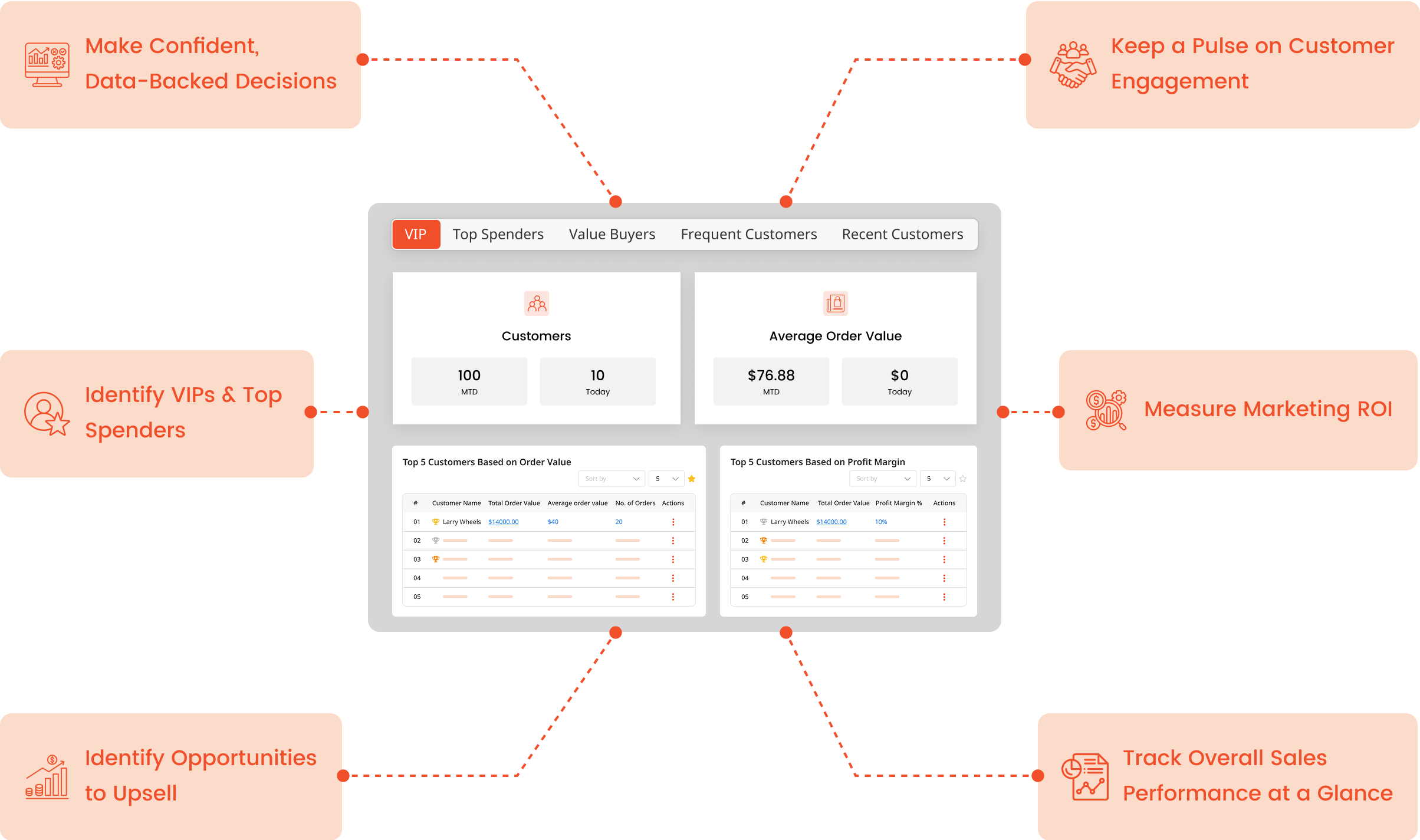
Unified Customer Profiles
Customer retention becomes difficult when ecommerce purchases, store transactions, SMS engagement, email activity, loyalty information, and customer-service history exist in separate systems.
Retailers increasingly need a clearer customer profile that brings relevant behavioral and transactional information together.
Behavioral Segmentation
Useful segmentation goes beyond demographics.
Retailers may want to identify:
Customers who purchased once but not again.
VIP customers with five or more purchases.
Customers spending above a certain amount.
Customers interested in specific categories.
Customers becoming inactive.
Customers approaching a typical replenishment date.
These segments allow marketing to reflect actual customer behavior.
Automated Customer Journeys
Marketing automation can help retailers build journeys such as:
Welcome → First Purchase
Purchase → Thank You → Recommendation → Second Purchase
Cart Abandonment → Reminder → Recommendation
Purchase → Replenishment
VIP → Early Access → Exclusive Offer
Inactive Customer → Win-Back
Instead of manually sending every message, customer behavior can trigger communication automatically.
Email and SMS Coordination
Email and SMS can complement each other, but excessive communication can quickly become frustrating.
Retailers should consider whether their platform can determine which customers receive which messages, through which channels, and at what stage of the journey.
Personalization
Retailers increasingly personalize communication according to purchase history, browsing behavior, category preferences, customer value, lifecycle stage, location, and engagement.
The objective is not simply personalization.
It is relevance.
Predictive Intelligence
Larger customer databases create opportunities to predict customer behavior.
Depending on the platform, retailers may be able to estimate:
Purchase likelihood
Churn risk
Customer lifetime value
Next purchase date
Product preference
Preferred channel
Optimal communication time
Loyalty and Customer Value
Retailers should ultimately evaluate marketing against business outcomes such as repeat purchase rate, purchase frequency, average order value, customer lifetime value, loyalty participation, reactivation, and revenue per customer.
1. Klaviyo: Best for Ecommerce Lifecycle Marketing
Overview
Klaviyo combines customer profiles, commerce data, email, SMS, automation, segmentation, analytics, and predictive functionality.
Its close relationship with ecommerce behavior makes it particularly relevant for retailers that want marketing journeys triggered by browsing and purchasing activity.
Key Features
- Email marketing
- SMS marketing
- Customer profiles
- Behavioral segmentation
- Automated flows
- Ecommerce integrations
- Predictive analytics
- Product recommendations
- Abandoned-cart automation
- Win-back campaigns
- Reporting
Pricing
Klaviyo pricing varies according to active profiles, email volume, SMS usage, and selected functionality.
Retailers should model costs against their actual database and communication volume because pricing can increase considerably as the audience grows.
Example Use Case
A customer purchases a coffee machine.
Instead of continuing to receive only generic promotions, the customer can enter a journey involving a thank-you message, setup information, coffee recommendations, accessory suggestions, and eventually a replenishment or cross-sell campaign.
Best For
Ecommerce-focused mid-market retailers that want customer behavior to drive lifecycle marketing.
Strengths
Klaviyo provides strong commerce-data integration, segmentation, automation, email, SMS, and retention-focused workflows.
Limitations
Large active-profile databases and high messaging volumes can increase costs substantially.
2. Bloomreach Engagement: Best for Advanced Retail Personalization
Overview
Bloomreach Engagement combines customer data, journey orchestration, segmentation, analytics, AI, email, SMS, and personalized digital experiences.
It is particularly relevant to retailers managing large catalogs and sophisticated personalization requirements.
Key Features
- Customer-data unification
- Advanced segmentation
- SMS/mobile marketing
- Journey orchestration
- AI-powered personalization
- Website personalization
- Product recommendations
- Analytics
- Advertising optimization
- Customer intelligence
Pricing
Bloomreach uses customized pricing based on factors such as customer scale, profiles, website traffic, product catalog, and communication requirements.
Example Use Case
A fashion retailer has thousands of products.
One customer regularly browses premium women’s footwear, while another primarily shops men’s sportswear.
Rather than sending both customers the same generic campaign, Bloomreach can help retailers build experiences and recommendations around individual interests and behavior.
Best For
Mid-market and larger retailers requiring advanced personalization and customer-data activation.
Strengths
Bloomreach provides substantial personalization capabilities across customer data, product discovery, journeys, and digital experiences.
Limitations
Implementation and ongoing management can be more complex than simpler marketing platforms.
3. Braze: Best for Cross-Channel Customer Engagement
Overview
Braze specializes in coordinating customer engagement across multiple digital channels.
It becomes particularly relevant when a retailer communicates through email, SMS, mobile apps, push notifications, in-app messaging, web messaging, and other real-time channels.
Key Features
- SMS
- Push notifications
- In-app messaging
- Web messaging
- Content Cards
- Cross-channel journeys
- Segmentation
- Personalization
- Analytics
- AI-assisted engagement
Pricing
Braze uses customized pricing based on platform edition, customer scale, channels, functionality, and engagement requirements.
Example Use Case
A loyal customer views a product in the retailer’s mobile app but leaves without purchasing.
The retailer can use journey logic to determine whether a push notification, email, SMS, or another channel is appropriate while suppressing unnecessary messages if the customer completes the purchase.
Best For
Mid-market retailers operating sophisticated mobile and cross-channel customer-engagement strategies.
Strengths
Braze provides strong real-time orchestration across multiple customer communication channels.
Limitations
Retailers focused primarily on straightforward email campaigns may not require its level of cross-channel complexity.
4. Universell Platform: Best for Marketing Connected With Broader Retail Operations
Overview
Universell takes a broader operational approach to retail marketing.
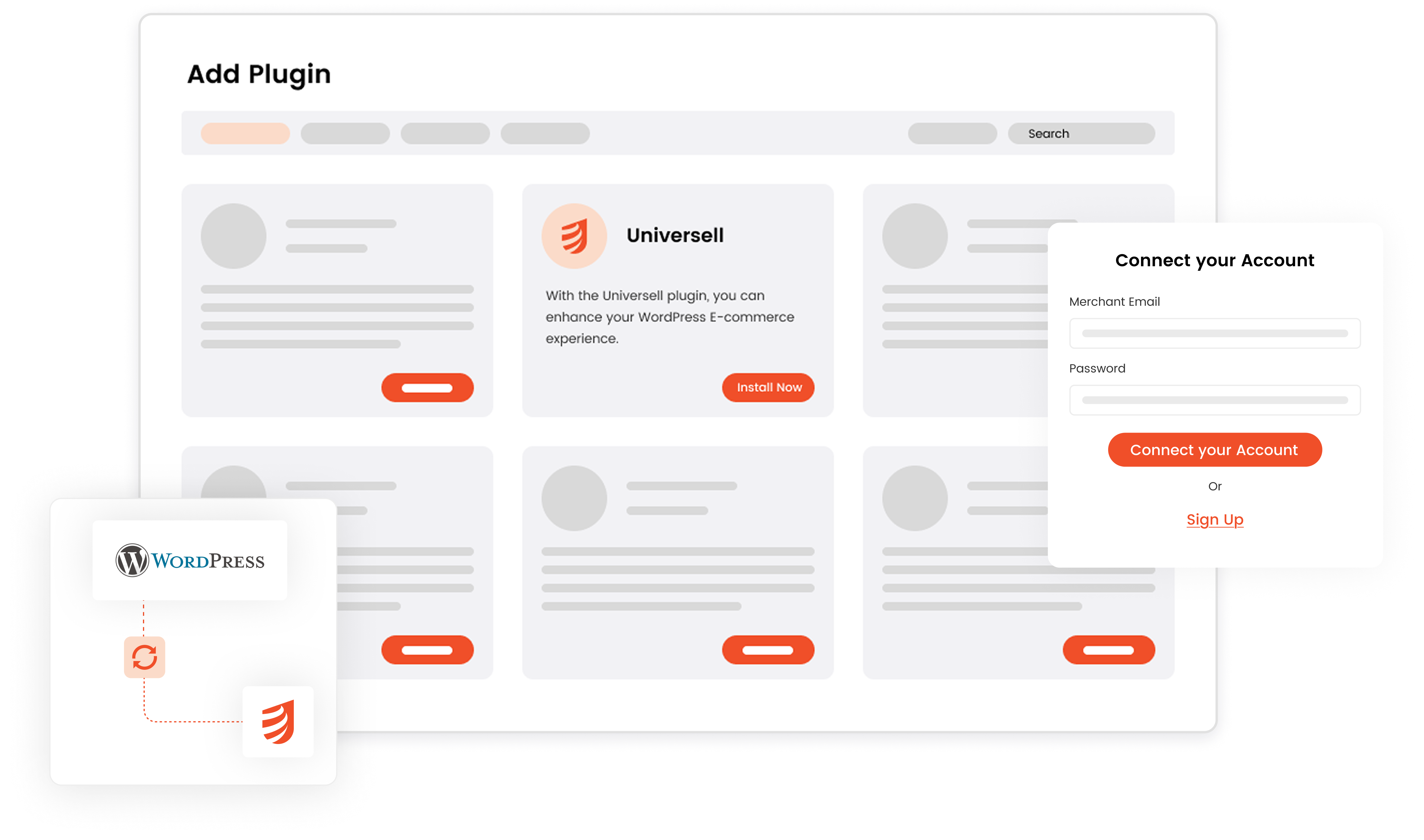
Rather than treating marketing as a separate system, Universell connects marketing-related functionality with other business areas such as CRM, payments, sales, loyalty, inventory, scheduling, reporting, automation, and customer management.
This can be relevant for mid-market retailers whose challenge is not simply sending campaigns but connecting marketing activity with the wider customer lifecycle.
Key Features
- Email marketing
- SMS marketing
- CRM
- Customer management
- Loyalty and rewards
- Marketing automation
- Sales management
- Payments
- Inventory
- Scheduling
- Reporting
- Broader business automation
Pricing
Businesses should check Universell’s current pricing and plan structure based on users, locations, required functionality, marketing volume, and operational requirements.
Example Use Case
A customer purchases from a retailer, joins the loyalty program, and later becomes eligible for a follow-up campaign.
Instead of maintaining the transaction, customer profile, loyalty information, and marketing activity across several unrelated systems, a broader operating platform can keep more of those activities connected.
Best For
Mid-market retailers that want marketing connected with CRM, sales, loyalty, payments, inventory, and broader business operations.
Strengths
Universell’s main advantage is operational consolidation. Marketing can remain closer to customer, transaction, sales, loyalty, and other business information.
Limitations
Retailers requiring highly sophisticated enterprise campaign orchestration, advanced predictive personalization, or extensive mobile-app engagement may prefer specialized platforms such as Bloomreach, Braze, or Salesforce.
5. Yotpo: Best for Loyalty, Reviews and Customer Advocacy
Overview
Yotpo approaches retention through loyalty, referrals, reviews, user-generated content, and related ecommerce customer-engagement capabilities.
Its value becomes particularly clear when retailers want existing customers to contribute to both retention and acquisition.
Key Features
- Loyalty programs
- VIP tiers
- Points and rewards
- Referral programs
- Reviews
- User-generated content
- Customer advocacy
- Ecommerce integrations
- Customer engagement
- Retention tools
Pricing
Yotpo pricing varies according to product, order volume, and selected functionality.
Reviews, loyalty, and other capabilities may have different plan structures, so mid-market retailers should evaluate the complete combination required.
Example Use Case
A customer makes several purchases and reaches VIP status.
The retailer can reward that customer with additional points, exclusive benefits, early product access, or referral incentives while also requesting reviews or user-generated content.
Best For
Retailers where loyalty, referrals, reviews, and customer advocacy are important retention strategies.
Strengths
Yotpo connects multiple customer-retention mechanisms beyond traditional campaign messaging.
Limitations
Retailers prioritizing sophisticated cross-channel journey orchestration may require additional marketing technology.
6. Attentive: Best for SMS-Led Customer Engagement
Overview
Attentive is particularly well known for SMS and mobile customer engagement.
Its platform also extends into email, push, cross-channel journeys, segmentation, testing, analytics, and AI-assisted messaging.
Key Features
- SMS
- MMS
- RCS
- Push
- Cross-channel journeys
- Segmentation
- A/B testing
- Campaign analytics
- AI-assisted messaging
- Customer-data integrations
Pricing
Attentive uses customized usage-based pricing influenced by subscriber count, messaging volume, channels, and selected functionality.
Example Use Case
A popular product returns to stock.
Instead of sending the notification to the retailer’s entire customer database, Attentive can help target customers who previously showed interest and communicate through mobile channels where appropriate.
Best For
Retailers where SMS and mobile communication play a major role in customer engagement.
Strengths
Attentive provides strong mobile messaging, segmentation, personalization, and cross-channel capabilities.
Limitations
Retailers looking for an all-in-one CRM or broader retail operating environment will generally need additional systems around it.
7. HubSpot Marketing Hub: Best for CRM-Centered Marketing
Overview
HubSpot Marketing Hub operates within HubSpot’s broader customer platform.
Its CRM-centered structure makes it particularly relevant when marketing needs to connect with sales, customer service, content, lead management, and customer records.
Key Features
- CRM
- Email marketing
- Marketing automation
- Segmentation
- Forms
- Landing pages
- Campaign management
- Customer journeys
- Lead management
- Reporting
- Sales and service integration
Pricing
HubSpot’s pricing varies significantly according to edition, seats, marketing contacts, and functionality.
Professional and Enterprise configurations can represent substantial investments for mid-market organizations, particularly as contact databases grow.
Example Use Case
A retailer operates consumer ecommerce alongside wholesale and corporate sales.
Marketing can use CRM information to create different journeys for a standard consumer, a wholesale prospect, a corporate account, and an existing high-value customer.
Best For
Mid-market retailers with CRM-heavy customer journeys or sales and service teams operating alongside ecommerce.
Strengths
HubSpot connects marketing closely with CRM, sales, service, content, and customer information.
Limitations
Ecommerce-first retailers may find commerce-focused platforms more naturally aligned with transactional retail behavior.
8. Salesforce Marketing Cloud: Best for Complex Enterprise Marketing Ecosystems
Overview
Salesforce Marketing Cloud provides broad marketing capabilities that can connect with the larger Salesforce ecosystem spanning CRM, commerce, service, customer data, loyalty, analytics, and sales.
It is most relevant when marketing forms part of a larger Salesforce technology environment.
Key Features
- Customer journeys
- Segmentation
- Forms
- Landing pages
- Marketing analytics
- Personalization
- AI-assisted campaign creation
- SMS and mobile capabilities
- Customer-data integration
- Salesforce CRM integration
Pricing
Salesforce Marketing Cloud pricing varies considerably by edition and additional functionality.
Advanced personalization, loyalty, customer-data, and other capabilities can add substantially to the total platform investment.
Example Use Case
A retailer already operates Salesforce CRM, Commerce, Service, and customer-data products.
Marketing Cloud can use information across that ecosystem to coordinate campaigns and customer journeys involving sales, service, ecommerce, loyalty, and marketing interactions.
Best For
Larger mid-market retailers with complex omnichannel requirements and significant existing Salesforce infrastructure.
Strengths
Salesforce provides extensive marketing capabilities within a much broader enterprise customer ecosystem.
Limitations
Cost, administration, implementation, and technical complexity can be considerably higher than more focused retail marketing platforms.
The Real Customer Retention Problem
Retention is not simply about sending more promotions.
Consider five customers:
Customer A purchases every month.
Customer B has not purchased for a year.
Customer C purchased yesterday.
Customer D abandoned a cart this morning.
Customer E consistently purchases premium products.
Sending all five the same promotion ignores the information the retailer already has.
A more useful model is:
Customer Behavior → Segment → Journey → Relevant Message → Purchase → Updated Profile → Next Journey
The platform should help retailers make customer communication more relevant as customer behavior changes.
Acquisition Marketing vs. Retention Marketing
| Acquisition Focus | Retention Focus |
| Find new customers | Develop existing customers |
| First purchase | Next purchase |
| Reach | Relevance |
| Impressions | Customer value |
| Ad targeting | Behavioral targeting |
| Conversion rate | Repeat purchase rate |
| Customer acquisition cost | Customer lifetime value |
| New subscribers | Active customers |
| Generic promotion | Lifecycle communication |
Retailers need both.
Acquisition creates the customer relationship.
Retention determines how valuable that relationship becomes.
Five Retention Automations Mid-Market Retailers Should Consider
First-to-Second Purchase
After the first purchase, retailers can use product education, complementary recommendations, loyalty invitations, or second-purchase incentives to encourage another transaction.
Win-Back
Customers who become inactive can enter dedicated reactivation journeys rather than continuing to receive the same generic campaigns indefinitely.
Replenishment
Retailers selling repeat-purchase products such as skincare, coffee, beauty products, pet supplies, or household goods can communicate around expected replenishment periods.
VIP
High-value customers can receive differentiated treatment through early access, exclusive products, loyalty benefits, events, or personalized recommendations.
Churn Risk
Where predictive capabilities are available, retailers can identify changes in purchasing behavior and potentially intervene before an active customer becomes completely disengaged.
What Customer Retention Software Can Be Worth
Consider a retailer with:
100,000 active customers
Average annual revenue per customer:
$200
Total annual customer revenue:
$20 million
If improved retention increased average annual customer revenue by 5%, the difference would represent:
$1 million in additional annual revenue.
This is a simplified illustration rather than a forecast.
However, it demonstrates why mid-market retailers should evaluate marketing technology against potential customer value rather than subscription price alone.
Which Retail Marketing Software Should Your Business Choose?
Consider Klaviyo if your business is ecommerce-heavy and you want commerce behavior, email, SMS, automation, and segmentation closely connected.
Consider Bloomreach Engagement if sophisticated personalization and customer-data activation are major requirements.
Consider Braze if mobile, push, email, SMS, and real-time cross-channel engagement are central to your strategy.
Consider Universell Platform if you want marketing connected with CRM, loyalty, payments, sales, inventory, scheduling, and broader retail operations.
Consider Yotpo if loyalty, referrals, reviews, and customer advocacy are major retention mechanisms.
Consider Attentive if SMS and mobile engagement are particularly important.
Consider HubSpot if CRM, sales, service, content, and marketing need to operate within a common customer environment.
Consider Salesforce Marketing Cloud if your retailer has complex enterprise marketing requirements and already operates significant Salesforce infrastructure.
Frequently Asked Questions
What is the best retail marketing software for mid-market retailers?
It depends on the retailer’s marketing model.
Klaviyo is particularly relevant to ecommerce lifecycle marketing. Bloomreach provides advanced personalization, while Braze specializes in cross-channel engagement.
Universell connects marketing with broader business operations. Yotpo focuses on loyalty and advocacy, Attentive specializes in mobile engagement, HubSpot takes a CRM-centered approach, and Salesforce provides extensive enterprise marketing capabilities.
Where does Universell fit compared with dedicated marketing platforms?
Universell takes a broader operational approach.
Dedicated platforms such as Klaviyo, Bloomreach, Braze, and Attentive provide deeper specialization in particular marketing areas.
Universell becomes more relevant when the business wants marketing activity connected with CRM, sales, payments, loyalty, inventory, scheduling, and other operational workflows.
The better choice depends on whether marketing specialization or broader operational consolidation is the priority.
What is customer retention marketing?
Customer retention marketing focuses on encouraging existing customers to continue purchasing from the business.
Common strategies include post-purchase communication, loyalty programs, recommendations, replenishment reminders, VIP programs, win-back campaigns, lifecycle email, SMS, and customer-service follow-up.
What metrics should retailers track?
Useful metrics include:
Repeat purchase rate
Customer retention rate
Purchase frequency
Customer lifetime value
Average order value
Churn rate
Reactivation rate
Time between purchases
Loyalty participation
Revenue per customer
Is email enough for customer retention?
Email remains important, but many mid-market retailers combine it with SMS, loyalty, reviews, personalization, mobile apps, customer service, paid retargeting, and on-site experiences.
The right combination depends on customer behavior and the retailer’s business model.
Can AI improve retail customer retention?
AI can help analyze behavioral data, identify patterns, create segments, predict churn, recommend products, optimize send times, personalize communication, and improve journeys.
However, effective retention still depends on accurate data, useful products, relevant communication, and a strong customer experience.
Should retailers choose marketing software based on price?
Price should be considered alongside:
Platform subscription
Customer profiles
Message volume
SMS costs
Integrations
Implementation
Additional software
Administration
Customer value generated
A less expensive system is not necessarily more economical if it cannot support the retailer’s required customer journeys.
Your Next Step
For ecommerce-focused lifecycle marketing, start with Klaviyo. For advanced personalization or cross-channel engagement, compare Bloomreach and Braze. If you want marketing connected with CRM, loyalty, payments, sales, inventory, and wider retail operations, consider Universell Platform. For more specialized needs, Yotpo is strong for loyalty, Attentive for SMS, HubSpot for CRM-led marketing, and Salesforce for complex enterprise marketing.
By Katya Z. | Marketing Manager
Business technology, AI, marketing & e-commerce