Customer loyalty software for small retailers ranges from free ecommerce apps to dedicated platforms costing hundreds of dollars per month.
But the best loyalty program is not necessarily the one with the most complicated points system.
Small retailers need a program customers can understand and actually use.
That usually means making it easy to:
- Earn points
- Check rewards
- Redeem rewards
- Receive birthday offers
- Refer friends
- Earn repeat-purchase benefits
- Receive comeback incentives
- Use rewards online or in store
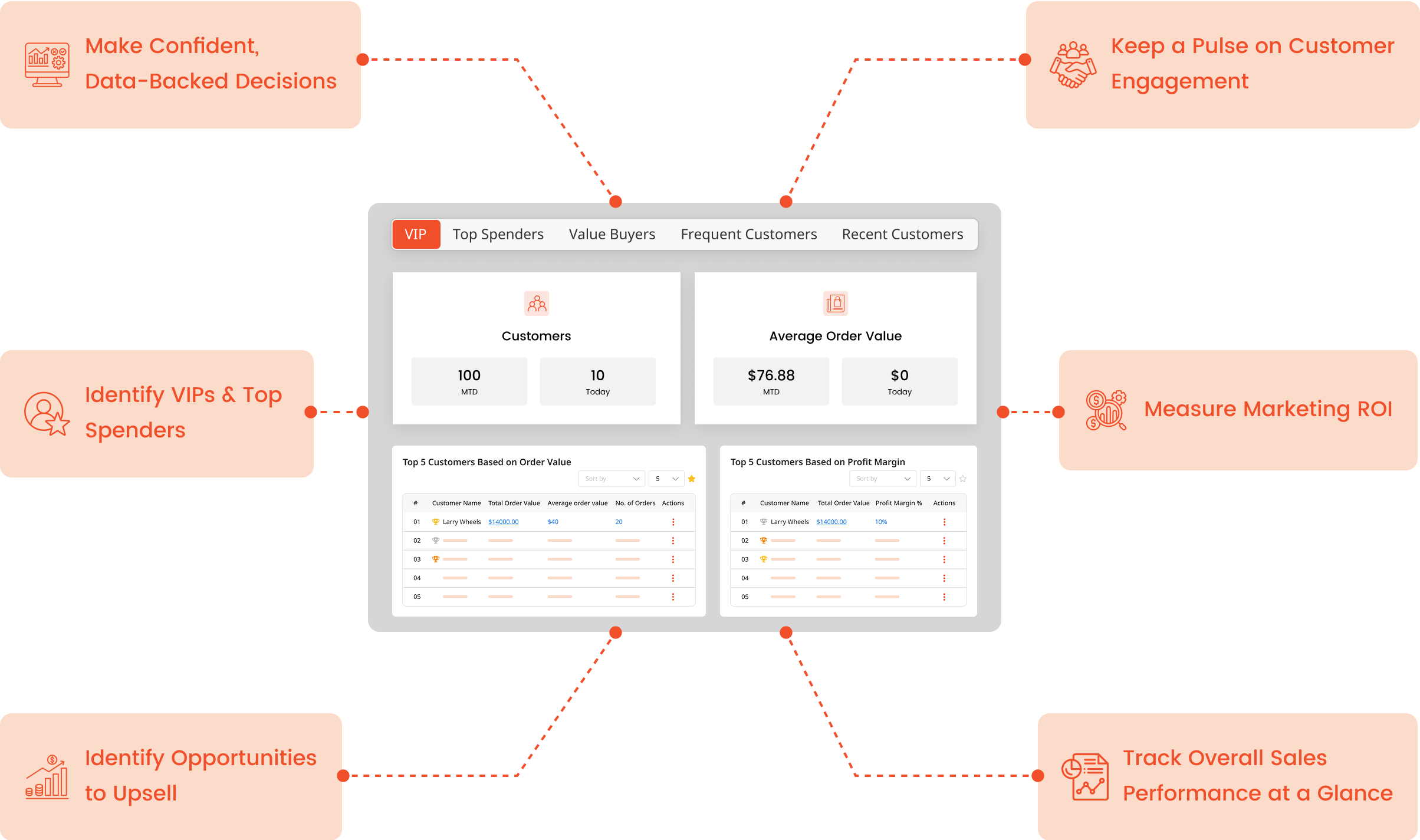
For retailers, loyalty becomes much more valuable when it connects with customer records, purchase history, POS, marketing, sales, and other parts of the business.
Some platforms focus primarily on ecommerce loyalty. Others connect rewards directly with POS or customer marketing. Universell takes a broader approach by connecting loyalty with CRM, sales, payments, email, SMS, customer data, and wider retail operations.
To keep this comparison fair, each platform is evaluated using the same criteria:
- Overview
- Key Features
- Pricing
- Example Use Case
- Best For
- Strengths
- Limitations
Product and pricing information should always be confirmed directly with each provider before purchasing.
Quick-Scan Comparison: Loyalty & Rewards Platforms
| Platform | Best For | Points & Rewards | Referrals | Marketing Connection | Small-Retail Fit |
| Square Loyalty | Existing Square retailers | Excellent | Limited | Strong within Square | Excellent |
| Smile.io | Shopify loyalty programs | Excellent | Yes | Ecommerce focused | Excellent |
| LoyaltyLion | Advanced ecommerce loyalty | Excellent | Yes | Strong integrations | Very Good |
| Universell Platform | Loyalty + broader retail operations | Excellent | Yes | Strong | Excellent |
| Yotpo Loyalty & Referrals | Loyalty + customer advocacy | Excellent | Excellent | Strong ecommerce fit | Very Good |
| Marsello | Loyalty + retail marketing | Excellent | Yes | Excellent | Very Good |
| TapMango | In-store loyalty engagement | Excellent | Yes | Strong | Very Good |
The important difference is not simply which platform can award points.
Almost all of them can.
The bigger question is how well the loyalty program fits the way customers already shop.
What Small Retailers Actually Need From Loyalty Software
Simple Points and Rewards
A loyalty program should be easy to understand.
For example:
Spend $1 → Earn 1 Point
100 Points → Receive $5 Reward
Or:
Make 5 Purchases → Receive a Free Product
The exact structure depends on margins, purchase frequency, and customer behavior, but customers should immediately understand how they earn and redeem rewards.
First-Purchase Incentives
The first transaction creates an opportunity to encourage the second.
A retailer might award points or a reward immediately after a customer’s first purchase and give that benefit a reasonable redemption period.
This gives the customer a reason to return.
Punch-Card Rewards
Digital punch cards apply a simple repeat-purchase concept without requiring customers to carry physical cards.
For example:
Buy 5 Coffees → Get the 6th Free
or
Make 10 Purchases → Receive $10 Off
This approach can work particularly well for businesses with frequent repeat visits.
Birthday Rewards
Birthday rewards provide a natural reason to reconnect with customers.
Examples include:
Bonus points
Free products
Percentage discounts
Dollar discounts
VIP benefits
The value comes not only from the reward but from making communication feel more relevant.
Referral Rewards
Referral programs can encourage existing customers to bring in new shoppers.
A simple structure might be:
Give $10 → Get $10
The new customer receives an incentive while the existing customer earns a benefit after the qualifying referral.
Comeback Campaigns
Inactive customers can be treated differently from active customers.
For example, a customer who has not purchased for 90 days could receive a targeted comeback offer rather than the same promotion sent to everyone.
Easy Redemption
Customers should be able to redeem rewards without complicated steps.
Useful redemption methods may include:
POS checkout
Online checkout
Customer account
Mobile wallet
Reward code
Automatic account balance
Customer Communication
Customers often forget unused rewards.
Useful communication can include:
Points earned
Reward available
Points expiring
Birthday reward
Comeback reward
VIP upgrade
Referral success
Bonus-points promotion
Loyalty Analytics
Retailers should track whether the program is actually influencing repeat purchasing.
Useful metrics may include:
Enrollment
Active members
Points issued
Points redeemed
Redemption rate
Repeat purchase rate
Referral activity
Reward cost
Average spend
Customer lifetime value
1. Square Loyalty: Best for Stores Already Using Square
Overview
Square Loyalty is designed to work closely with Square POS and payment activity.
For retailers already using Square, this can make loyalty relatively easy to add without introducing a completely separate customer and checkout system.
Key Features
- Points-based rewards
- Visit-based rewards
- Spend-based rewards
- Item and category rewards
- Loyalty tiers
- Customer enrollment
- POS redemption
- Promotional loyalty campaigns
- Customer activity tracking
- Square ecosystem integration
Pricing
Square Loyalty availability and pricing depend on Square’s current software plans and configuration.
Retailers should check current plan requirements directly with Square.
Example Use Case
A coffee shop already uses Square Register.
Customers enroll using their phone number at checkout, earn points after purchases, and redeem rewards through the same POS environment without employees maintaining a separate loyalty system.
Best For
Small physical retailers already using Square for POS and payments.
Strengths
Square Loyalty keeps checkout, payment activity, customer information, and rewards closely connected.
Limitations
Its strongest value comes from remaining within the Square ecosystem. Retailers using other POS or ecommerce systems may prefer a more platform-neutral loyalty tool.
2. Smile.io: Best for Shopify Retailers Starting a Loyalty Program
Overview
Smile.io provides an accessible way for ecommerce businesses, particularly Shopify retailers, to introduce points, referrals, and customer rewards.
Its plan structure makes it relatively easy for small retailers to start simple and add more advanced loyalty features as they grow.
Key Features
- Points programs
- Referral programs
- Discount rewards
- Free-shipping rewards
- Account-creation rewards
- Birthday rewards
- Social engagement rewards
- VIP programs on applicable plans
- Brand customization
- Ecommerce integrations
Pricing
Smile.io offers a free plan along with paid tiers that increase order limits and add more advanced functionality.
Businesses should confirm current plan limits and pricing based on monthly order volume.
Example Use Case
A small Shopify retailer wants to reward purchases, account creation, birthdays, and referrals without implementing a complex enterprise loyalty platform.
Smile.io provides a relatively simple way to launch that program.
Best For
Small Shopify retailers introducing structured loyalty and referral programs.
Strengths
Smile.io offers an accessible starting point, straightforward ecommerce integration, and a clear upgrade path.
Limitations
Some of its more advanced functionality requires higher-tier plans, and it is primarily ecommerce-focused rather than a complete retail operating platform.
3. LoyaltyLion: Best for Ecommerce Loyalty Optimization
Overview
LoyaltyLion focuses heavily on using loyalty as a retention and customer-value strategy rather than simply maintaining points balances.
It is particularly relevant to ecommerce retailers wanting deeper tiers, integrations, analytics, and loyalty optimization.
Key Features
- Points and rewards
- VIP tiers
- Referrals
- Free-product rewards
- Percentage discounts
- Dollar discounts
- Free shipping
- Subscription rewards
- Customer analytics
- Loyalty integrations
- Predictive and retention insights on applicable plans
Pricing
LoyaltyLion offers different plans based on order volume and required functionality, including entry options and higher paid tiers.
Retailers should check current pricing based on monthly order volume.
Example Use Case
An ecommerce retailer wants to move beyond a basic points program and identify which customers are becoming VIPs, how rewards influence repeat purchasing, and whether loyalty members generate more revenue over time.
LoyaltyLion provides tools for that type of optimization.
Best For
Ecommerce retailers treating loyalty as a major retention strategy.
Strengths
LoyaltyLion provides stronger analytics, tiering, integrations, and program optimization than many basic loyalty apps.
Limitations
Higher-tier pricing may be difficult to justify for very small retailers with low order volume.
4. Universell Platform: Best for Loyalty Connected With Broader Retail Operations
Overview
Universell takes a broader business-management approach to loyalty.
Rather than treating rewards as a separate application, the platform connects loyalty functionality with CRM, sales, payments, customer communication, POS-related workflows, inventory, reporting, and other retail operations.
Key Features
- First-time purchase rewards
- Punch-card rewards
- Referral rewards
- Birthday rewards
- Comeback rewards
- Custom points rules
- Reward expiry
- Automated reminders
- Email communication
- SMS communication
- Customer records
- Loyalty analytics
- Broader retail-management tools
Pricing
Retailers should check directly with Universell for current pricing, plan availability, user requirements, and loyalty functionality.
Example Use Case
A boutique wants a customer to earn points after purchase, receive a birthday reward later, get a comeback offer if they become inactive, and have all of that activity remain closer to the customer record, email, SMS, payment, and sales history.
A broader platform can reduce the number of separate applications needed to manage that journey.
Best For
Small retailers that want loyalty connected with CRM, sales, payments, email, SMS, customer information, and wider retail operations.
Strengths
Universell’s main advantage is consolidation across loyalty, customer management, communication, and other business functions.
Limitations
Ecommerce brands requiring very advanced standalone loyalty customization, specialized Shopify functionality, or deep loyalty analytics may prefer a dedicated platform such as LoyaltyLion, Smile.io, or Yotpo.
5. Yotpo Loyalty & Referrals: Best for Loyalty and Customer Advocacy
Overview
Yotpo combines loyalty with referral marketing and broader ecommerce customer-engagement functionality.
Its approach is particularly relevant when retailers want customers to both purchase again and bring new shoppers into the business.
Key Features
- Points programs
- Rewards
- Referral programs
- Loyalty tiers
- Customer eligibility rules
- Loyalty analytics
- Referral tracking
- Ecommerce integrations
- Custom loyalty experiences
- Customer advocacy tools
Pricing
Yotpo offers different pricing levels based on order volume and selected products.
Smaller brands may have access to entry-level options, while mid-market implementations can become more expensive as usage grows.
Example Use Case
An ecommerce retailer wants existing customers to receive points for repeat purchases while also earning rewards for referring friends.
The referred customer receives an incentive, and the original customer receives a reward after the qualifying purchase.
Best For
Ecommerce retailers wanting loyalty and referral programs to work together.
Strengths
Yotpo combines repeat-purchase incentives with customer advocacy and referral functionality.
Limitations
Physical retailers without a substantial ecommerce presence may find other platforms more naturally aligned with their workflow.
6. Marsello: Best for Loyalty Connected With Retail Marketing
Overview
Marsello combines loyalty with customer segmentation and marketing functionality.
Its approach is useful for retailers that want to move beyond simple points and create different campaigns for different customer groups.
Key Features
- Points-based loyalty
- Rewards
- Referrals
- Customer portal
- Apple and Google Wallet support
- VIP tiers on applicable plans
- Customer segmentation
- RFM analysis
- Marketing automation
- Feedback surveys
- Analytics and reporting
- POS and ecommerce integrations
Pricing
Marsello offers multiple paid plans, with costs generally increasing according to site count and functionality.
Businesses should check current pricing for loyalty, marketing, and advanced segmentation requirements.
Example Use Case
A retailer wants to treat recent customers, VIPs, high-value customers, and inactive shoppers differently.
Using RFM segmentation, the business can create different loyalty or marketing campaigns for each group instead of sending everyone the same offer.
Best For
Small and growing retailers wanting loyalty connected with segmentation and customer marketing.
Strengths
Marsello combines loyalty and customer marketing within a relatively unified retail-focused environment.
Limitations
Costs can increase as businesses add locations and more advanced functionality, making it more expensive than simple loyalty apps.
7. TapMango: Best for In-Store Customer Engagement
Overview
TapMango focuses heavily on physical-store loyalty and customer engagement.
Its approach is particularly relevant to businesses where customers frequently visit a location and interact with loyalty tools during the in-store experience.
Key Features
- Points and rewards
- Customer loyalty tools
- Campaigns
- Customer groups
- Referral functionality
- Instant deals
- Customer-facing tablet options
- Multi-location support
- Customer engagement tools
- Customization
Pricing
TapMango uses custom pricing.
Businesses need to request pricing based on locations, functionality, and deployment requirements.
Example Use Case
A bakery wants customers to check into its loyalty program during store visits, earn points after purchases, receive targeted offers, and participate in promotions tailored to regular, new, or inactive customers.
TapMango’s in-store approach is well aligned with that model.
Best For
Physical retailers where loyalty and in-store customer engagement are central.
Strengths
TapMango provides a retail-friendly in-store loyalty experience and supports customer engagement across multiple locations.
Limitations
Businesses looking for simple published pricing or primarily ecommerce-focused loyalty functionality may prefer another platform.
The Real Cost of a Loyalty Program
Software cost is only one part of the equation.
Reward economics matter too.
Suppose a retailer offers:
Spend $100 → Receive $20 Reward
That represents an effective reward value of 20%.
If margins are already tight, the program can become expensive quickly.
A more sustainable structure might be:
Spend $100 → Receive $5 Reward
The effective reward rate becomes 5%.
Retailers should balance:
Customer appeal
Margin
Purchase frequency
Reward cost
Redemption rate
Customer lifetime value
The goal is not to give away the biggest reward.
It is to create profitable repeat purchasing.
Discounting vs. Loyalty
Discounts and loyalty incentives serve different purposes.
A discount says:
Buy today and save 10%.
A loyalty reward says:
Buy today and earn something toward your next purchase.
The first primarily influences the current transaction.
The second attempts to create another transaction.
For example:
10% Off Today → Customer pays less → Transaction ends
versus
Earn $10 Toward Your Next Purchase → Customer buys today → Customer has a reason to return
Standalone Loyalty Software vs. All-in-One Retail Platform
| Requirement | Standalone Loyalty Tool | All-in-One Platform |
| Points | ✓ | ✓ |
| Rewards | ✓ | ✓ |
| Referrals | Usually | Available |
| Birthday campaigns | Usually | Available |
| Comeback rewards | Varies | Available |
| CRM | Integration required | Connected |
| POS | Integration required | Connected |
| Inventory | Separate | Connected |
| Integration/add-on | Connected | |
| SMS | Integration/add-on | Connected |
| Payments | Separate | Connected |
| Customer history | Partial/integrated | Broader |
| Business operations | Limited | Broader |
Neither approach is automatically better.
A Shopify retailer that primarily needs ecommerce rewards may prefer Smile.io or LoyaltyLion.
A store already using Square may find Square Loyalty the most natural fit.
A business trying to connect loyalty with several other retail functions may benefit more from a broader platform.
Which Loyalty Software Should Your Business Choose?
Consider Square Loyalty if your physical store already uses Square POS and payments.
Consider Smile.io if you run a smaller Shopify store and want an accessible way to introduce points and referrals.
Consider LoyaltyLion if ecommerce loyalty is a major retention strategy and you need deeper analytics, tiers, and optimization.
Consider Universell Platform if you want loyalty connected with CRM, sales, payments, email, SMS, customer information, and broader retail operations.
Consider Yotpo Loyalty & Referrals if loyalty and customer referrals need to operate together within an ecommerce environment.
Consider Marsello if you want loyalty connected with customer segmentation and retail marketing.
Consider TapMango if physical-store visits and in-store customer engagement are central to your loyalty strategy.
Frequently Asked Questions
What is the best loyalty software for a small retail business?
It depends on how the retailer operates.
Square Loyalty is particularly useful for stores already using Square.
Smile.io is well suited to smaller Shopify retailers, while LoyaltyLion provides deeper ecommerce loyalty functionality.
Universell connects loyalty with broader retail operations. Yotpo combines loyalty with referrals, Marsello adds customer segmentation and marketing, and TapMango focuses heavily on physical-store engagement.
Is there free loyalty software for small retailers?
Yes.
Some platforms offer free or entry-level plans for smaller businesses.
The important consideration is whether the plan will still meet your needs as order volume, customer count, locations, and loyalty activity grow.
What rewards should a small retailer offer?
Popular options include:
- Dollar discounts
- Percentage discounts
- Free products
- Free shipping
- Birthday rewards
- VIP benefits
- Early access
- Referral rewards
- Punch-card rewards
- Bonus points
The right reward depends on margins, purchase frequency, customer preferences, and business model.
Do loyalty programs create repeat purchases?
They can encourage repeat purchasing when rewards provide customers with a meaningful reason to return.
However, loyalty software cannot replace product quality, customer service, convenience, pricing, and a positive shopping experience.
Should loyalty rewards expire?
Expiration can create urgency and encourage another visit.
However, very short expiration periods may frustrate customers.
Retailers should provide enough time for customers to reasonably use their rewards.
Is loyalty better than discounting?
The two strategies serve different objectives.
Discounts primarily influence the current transaction.
Loyalty rewards can create an incentive for the next transaction.
That makes loyalty particularly relevant to businesses focused on customer retention.
What should retailers track in a loyalty program?
Useful metrics include:
Enrollment rate
Active members
Points issued
Points redeemed
Redemption rate
Repeat purchase rate
Average spend
Purchase frequency
Referral activity
Customer lifetime value
Reward cost
Revenue from loyalty members
Should a small retailer create VIP tiers?
Not necessarily at the beginning.
A simple program can be easier for customers to understand.
As the customer base grows, VIP tiers can become useful for recognizing high-value customers and offering differentiated benefits.
Your Next Step
Start with the customer behavior you want to encourage.
If your store already uses Square, evaluate Square Loyalty. If you operate primarily through Shopify, compare Smile.io and LoyaltyLion. If loyalty and referrals are central to your ecommerce strategy, include Yotpo.
If you want loyalty connected with customer records, payments, sales, email, SMS, and broader retail operations, include Universell Platform in your evaluation.
Marsello is worth considering when segmentation and marketing matter alongside loyalty, while TapMango is particularly relevant to physical-store engagement.
The best loyalty platform is not simply the one offering the most points or rewards.
It is the one that fits how your customers shop, how your team operates, and what behavior you want the program to encourage.
By Katya Z. | Marketing Manager
Business technology, AI, marketing & e-commerce